

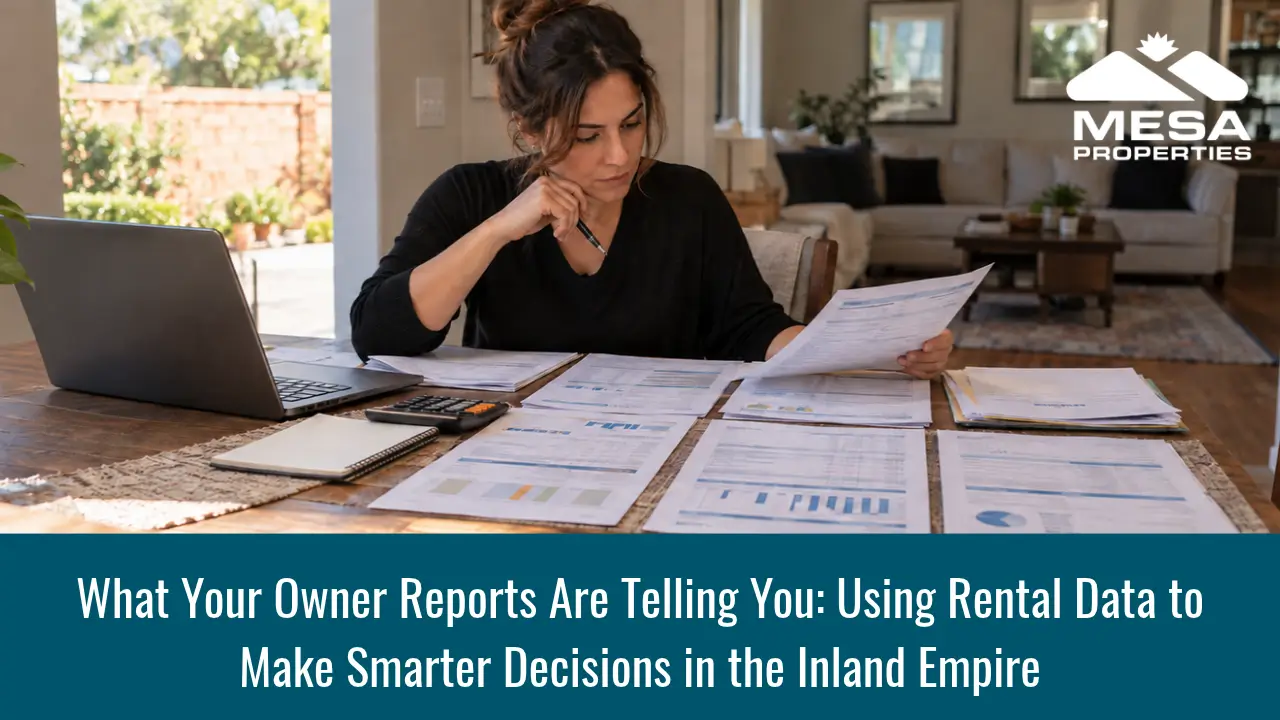
Most owners open their monthly statement, check the deposit amount, and move on. That habit is understandable, but it leaves useful information unread. Your statements, invoices, and year-end reports form a running record of how your rental actually performs, and over time that record can tell you when to adjust rent, when a repair has turned into a replacement, and whether the property still fits your goals.
For owners in Victorville, Fontana, Rancho Cucamonga, Ontario, and the rest of our service area, where insurance costs and market rents have both shifted recently, that record matters more than it used to.
Key Takeaways
Your net deposit is only one number, and comparing statements over several months reveals trends a single statement hides.
Repeat invoices for the same system are often the clearest signal that replacement will cost less than continued repairs.
Year-end cash flow statements are the best starting point for setting reserves and planning the year ahead.
Owner data is most useful when you tie it to a specific goal, such as steady cash flow, long-term appreciation, or an eventual sale.
Decide What You Want the Numbers to Answer
Reports are easier to read when you know what you're looking for. An owner who plans to hold a Hesperia rental for twenty years and eventually pay it off will care most about long-term maintenance costs and steady occupancy. Someone who bought in Fontana a few years ago and is watching for the right time to sell will be more focused on equity, market value, and how the property's net income compares to what that money could earn elsewhere.
Before you dig into your reports, write down the one or two questions that matter most to you right now. Is the property covering its costs with room to spare, or would it serve you better as a sale? Our ROI calculator is a useful way to put rough numbers to those questions before you look at the details.
What Your Monthly Statement Shows Beyond the Deposit
Our owner statements arrive on the 15th of each month and summarize income, expenses, and balances. Every repair invoice is uploaded to the owner portal along with before-and-after photos, and that level of detail is what makes a statement worth reading closely.
Look at Trends Over Several Months
One month with a large expense, like a water heater replacement, tells you very little on its own. Over six or twelve months, though, you might notice net income drifting lower or an expense category that keeps growing even though nothing major broke. Those patterns are worth a closer look.
Because the portal keeps your statement history available around the clock, you can pull the last year of statements and compare them side by side.
Watch for Seasonal Patterns
High Desert properties tend to show predictable seasonal spending. Air conditioning calls climb during summer heat in Apple Valley and Victorville, and winter wind and cold can bring roofing, fencing, and plumbing issues. Seeing those cycles in your own records helps you separate normal seasonal costs from a system that is starting to fail.
Reading Maintenance Records for Early Warnings
Invoices show where your money goes and why. When the same system shows up on several invoices within a year or two, the repair approach may have stopped being cost-effective.
Picture an HVAC unit in a Rancho Cucamonga rental that has needed three service calls in eighteen months, each costing a few hundred dollars. Added together and weighed against the age of the unit, they may point toward replacement before a full failure lands in the middle of a heat wave, when an emergency install costs more and your tenant is left without cooling.
The attached photos also let you judge the quality of the work and see the property's condition between inspections.
Using Year-End Reports to Plan Ahead
Along with year-end 1099s, our owners receive cash flow statements covering the full year. Beyond tax time, they give you the best single view of how the property performed.
Setting a Realistic Reserve
Your annual expense total, minus any one-time projects, gives you a baseline for routine costs. From there, many owners set aside a reserve that covers a few months of expenses plus a cushion for big-ticket items nearing the end of their useful life, such as a roof, water heater, or HVAC system. If your year-end numbers show repair costs rising on aging components, it makes sense to grow that reserve before the large bill arrives.
Accounting for Rising Fixed Costs
Insurance premiums and property taxes never show up as repair invoices, yet they shape your returns just as much. Comparing this year's fixed costs to last year's shows whether your rent is keeping pace with what it costs to own the home.
Turning the Data Into Decisions
Adjusting Rent at Renewal
When net income slips because expenses rose, a lease renewal is the natural point to revisit rent. Our general approach is to keep renewing tenants somewhat below full market rent, since turnover and vacancy usually cost more than a small increase brings in. Keep in mind that properties covered by California's statewide rent cap are limited in how much rent can rise over any 12-month period.
Repair, Replace, or Upgrade
Your maintenance history turns this decision from a guess into a comparison. Add up what you've spent on a system over the last few years, estimate what the next few years will likely cost, and weigh that total against replacement. More efficient cooling in a High Desert home can also cut future service calls and help keep good tenants longer.
Hold, Refinance, or Sell
Over longer stretches, your reports show whether the property is meeting the goal you set at the start. If cash flow has grown thin while your equity has grown substantially, it may be worth running the figures through our rent vs. sell calculator and talking through the options with your CPA or lender.
Frequently Asked Questions About Using Owner Reports
How often should I review my owner statements?
A quick look each month is enough to catch anything unexpected. A deeper review every six to twelve months, with statements compared side by side, is where trends become visible.
What is the most important number on an owner statement?
Net income matters most month to month, but the trend in total expenses often says more about where the property is heading.
Can I access past statements and invoices?
Yes. Mesa owners can log in to the owner portal at any time to view statements, invoices, repair photos, leases, and payment history.
Better Decisions Start With the Reports You Already Have
Reading your reports with a clear goal in mind helps you adjust rent at the right time, replace systems before they fail, and decide with confidence whether to keep holding the property. If you want reporting detailed enough to support those decisions, take a look at how we handle accounting for our owners or give our team a call.